

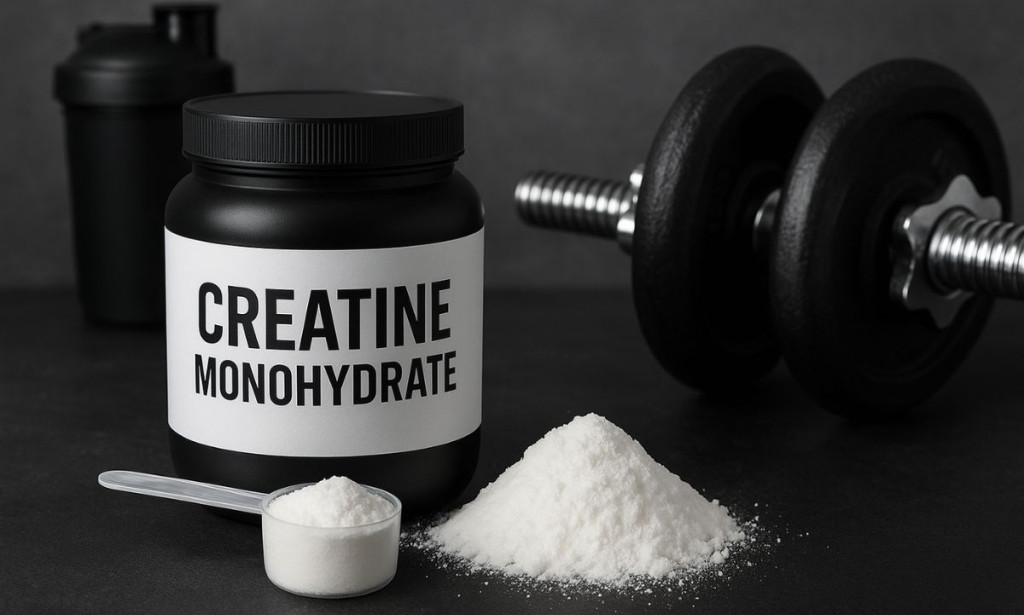

Creatine monohydrate is a gold-standard supplement for building muscle and boosting strength. Backed by decades of research, it helps muscles rapidly produce energy during intense exercise, enabling more reps and faster workouts. Combined with resistance training and proper nutrition, creatine monohydrate can significantly improve muscle strength, mass, and athletic performance.
In short, it’s a muscle-building powerhouse. This article explores creatine monohydrate’s benefits, how to take it, comparisons to other forms (like creatine HCl), and answers common FAQs.
Creatine monohydrate is naturally found in meat and fish (about 1–2 grams/day from diet) and produced by the body. The rest of the body’s creatine (about 95%) is stored in skeletal muscle. In muscles, creatine combines with phosphates to form phosphocreatine (PCr), which fuels quick energy bursts (ATP) for short, powerful efforts.
During weightlifting or sprinting, this mechanism helps you lift heavier, sprint faster, or do more reps. Over time, that extra workload leads to bigger gains.
A red supplement jar labeled “Amino Complex” sits on a dumbbell in a gym, illustrating a typical creatine monohydrate supplement container used for muscle growth.
Key Takeaway: Creatine monohydrate is the most-studied and commonly used form. It does not directly build muscle on its own, but when combined with training it boosts strength, power, and recovery.
What Is Creatine Monohydrate?
Creatine itself is an organic acid (often called an amino acid derivative) synthesized in the liver and kidneys from arginine, glycine and methionine. Creatine monohydrate is simply creatine bound to one water molecule the most basic, pure form used in supplements. It’s 100% bioavailable, meaning nearly all of an ingested dose is absorbed and taken up by muscle or excreted.
Almost all research on creatine uses monohydrate. As one review notes, “creatine monohydrate powder has been the most extensively studied and commonly used form of creatine”. In fact, creatine monohydrate is so well-validated that experts say “other forms of creatine are not superior to creatine monohydrate”. Monohydrate dissolves reasonably well in fluids, and it contains the highest creatine content by weight (87-90%) of any source. It’s very stable, pure (often Creapure® grade) and cheap per dose.
Unlike anabolic steroids, creatine is not a hormone. Harvard Medicine emphasizes, “creatine is not an anabolic steroid, nor does it increase testosterone levels”. It simply fuels muscles more effectively under training. Some initial water retention (a pound or two) can occur when you start taking creatine, but studies show this effect is short-lived and does not persist long-term. Most healthy adults experience no serious side effects at the recommended 3–5 grams per day.
Forms of Creatine Supplements: Creatine monohydrate is sold primarily as an odorless, white powder (which you mix into water or juice). It also comes in capsules, tablets, energy bars or novel forms like gummies. Powders are most popular because they’re cost-effective and easy to dose. Gummies and chewables offer convenience and flavor (often pre-dosed at ~5g per serving), but they may contain added sugars or fillers. No matter the form, look for 100% creatine monohydrate with minimal extras.
Benefits of Creatine Monohydrate for Muscle Growth
Creatine monohydrate delivers several proven muscle-building benefits when combined with resistance training:
-
Increased strength and power. By boosting your muscles’ ability to regenerate ATP, creatine helps you lift heavier weights and perform more reps. Studies consistently show higher maximal strength gains with creatine vs placebo.
-
Greater muscle mass gains. Over weeks of training, creatine users typically build more lean muscle. One study summary found creatine efficiently increases “muscle strength, muscle mass, and athletic performance”. In practical terms, research suggests people taking creatine can gain about 2–4 extra pounds of muscle over 4–12 weeks of weight training compared to non-users.
-
Improved exercise performance. Creatine reduces fatigue during high-intensity sets. Athletes often report being able to squeeze out 1–2 more reps per set, which accumulates to bigger gains long-term. It also aids short sprints, jumps, and power moves in sports.
-
Faster recovery. Supplementing with creatine helps muscles recover between sessions. Harvard Health notes evidence that creatine with adequate nutrition “can hasten muscle recovery after strenuous exercise”. Better recovery means less soreness and more consistent training.
-
Higher muscle energy stores. Creatine raises the total creatine and phosphocreatine content in muscles by 20–40%. This extra reservoir means muscles can perform high-intensity work longer.
Close-up of a muscular man bench pressing heavy dumbbells in a gym, demonstrating the type of strength training that creatine monohydrate can support through increased power and muscle recovery.
“Studies show that taking creatine with regular exercise increases muscle mass, strength and performance”. For example, a Cleveland Clinic summary of research reports that creatine may “improve exercise performance, help recovery, increase muscle mass, and reduce dehydration and cramping”. In well-designed trials, creatine users consistently gain more lean body mass and strength than those on placebo. Importantly, muscle growth is maximized when creatine is paired with a proper resistance-training program and enough protein/calories.
In summary, the benefits of creatine monohydrate include:
-
Boosting high-intensity strength and power output
-
Enhancing lean muscle gains over time
-
Extending performance in short bursts (sprints, lifts)
-
Speeding up muscle repair and recovery
-
Supporting muscle health during calorie deficit or aging
These advantages make creatine monohydrate ideal for bodybuilders, weightlifters, athletes and anyone looking to build muscle efficiently.
How to Use Creatine Monohydrate?
To get the most from creatine, follow these best practices:
-
Dosage: Aim for 3–5 grams of creatine monohydrate per day. Harvard experts recommend 3–5g daily and note that “loading up on a higher dose... offers no advantages”. In other words, a constant daily dose is sufficient; you don’t need a multi-day “loading phase” of 20g. The 5g amount (about one heaping teaspoon) is generally accepted as optimal.
-
Timing: You can take creatine at any time. Many people add it to a post-workout shake or morning beverage. The timing isn’t critical, as long as you take it consistently. Taking it with a carbohydrate-rich meal or shake can slightly improve uptake, since insulin helps shuttle creatine into muscles.
-
Mixing: Mix creatine powder into water, juice, or a protein shake. It dissolves better in warm or slightly acidic liquids (e.g., grape/orange juice). Stir or shake well. If you experience stomach discomfort with one serving, try splitting it into 2–3 smaller doses throughout the day.
-
Hydration: Stay well-hydrated. Creatine pulls water into muscle cells, so extra water helps. Drink an adequate amount of fluids (aim for 8–10 cups per day, or more if sweating heavily).
-
Consistency: Use creatine every day, including non-training days. Its effects come from consistently elevated muscle creatine stores. Even on rest days, a maintenance dose keeps levels topped up.
-
Loading vs. non-loading: Some people do a 5-day loading of 20g/day, but evidence shows this only saturates muscles faster (in ~1 week instead of 3–4). Since loading adds stress to kidneys and offers no further long-term benefit, it’s generally unnecessary for most users.
-
Stacking: Creatine works well with other supplements like protein and BCAAs, but avoid caffeinated “pre-workouts” if they dehydrate you. Caffeine does not negate creatine’s effect, but ensure you still drink water.
-
Form: Pure creatine monohydrate powder (especially micronized for easy mixing) is the cheapest and most research-backed choice. Avoid blends that contain unnecessary fillers or stimulants.
Example routine: Many users simply take 5g of creatine monohydrate each day in a protein shake or juice. After 6–8 weeks of use, muscle creatine stores will be maximized, amplifying your training gains.
Best Creatine Monohydrate Supplements:
When selecting a creatine monohydrate supplement, focus on quality and purity. The best products use pharmaceutical-grade creatine (often labeled Creapure® from Germany) with at least 99% creatine by weight. Look for labels that list only “creatine monohydrate” as the ingredient (with no proprietary blends). Some tips:
-
Micronized creatine: Finely ground for better solubility in liquids. This mixes more easily without graininess.
-
No extras: Avoid added sugars, artificial colors, or fillers. Some flavored products have unnecessary sweeteners. Unflavored powder is pure creatine and very cheap per serving.
-
Reputation: Choose brands with transparent labels and good reviews. Established supplement companies often produce pure creatine.
-
Powder vs. capsules: Powders are cheapest. Capsules may cost more and require taking many pills to match a scoop. Gummies and chewables (see below) are convenient but pricier.
We won’t list brand names here, but in general: a high-quality creatine monohydrate supplement will be unflavored or basic flavored, micronized, and offered by reputable sports nutrition companies. For example, formulations using Creapure® creatine are widely endorsed by athletes.
Regularly checking user reviews and third-party tests can help verify purity. When choosing the best creatine monohydrate, prioritize 100% pure creatine, third-party lab testing (to rule out contaminants), and good mixing properties. An affordable 1-2 month supply of powder often retails under $30, making it one of the most cost-effective muscle-building supplements.
Creatine Monohydrate vs. Other Forms (HCl, Citrate, Etc.):
There are many forms of creatine on the market (e.g., creatine HCl, creatine citrate, buffered creatine). The key comparisons:
-
Creatine Monohydrate: This is the gold standard. It has been used in virtually all major studies. It’s nearly 100% absorbed by the body, well tolerated, and inexpensive. No other form has been proven to deliver better muscle gains or safety. In fact, “other forms of creatine are not superior to creatine monohydrate” according to sports nutrition experts.
-
Creatine HCl (Hydrochloride): Claimed to be more soluble (up to 700 mg/ml), meaning a smaller dose might dissolve easier. Marketers claim this reduces bloating or stomach issues. However, physiological studies indicate both HCl and monohydrate similarly increase muscle creatine stores and strength. A recent trial found Cr-HCl offered no real advantage over monohydrate in training outcomes. In practical terms, monohydrate is already ~100% bioavailable. Bottom line: HCl is usually more expensive and often unnecessary for most users.
-
Other Forms (Citrate, Buffered, Ethyl Ester, etc.): These are marketed as better absorbed or no need to load. However, evidence shows none consistently outperform monohydrate in muscle uptake or performance. Many have lower creatine content per gram or extra ingredients. For example, creatine ethyl ester was found to convert more to creatinine (wasted) than monohydrate. Unless you have a specific reason (allergy to monohydrate additives, etc.), sticking to plain monohydrate is wise.
Research says: Creapure® creatine monohydrate has near-100% absorption. The only real difference with forms like HCl is that HCl dissolves in water faster. But solubility doesn’t change how much gets used – both end up boosting muscle creatine roughly equally. Consider cost: monohydrate typically offers many servings for the price of one small bottle of HCl.
As one review puts it: “There is currently no evidence to support the use of Cr-HCl instead of CrM” (and Cr-HCl is much pricier). And Harvard Health notes that all other creatine forms “do not offer any extra benefits” over monohydrate. In short, creatine monohydrate is still the best form for most people.
Creatine Monohydrate for Women:
Creatine is not just for men. Women benefit similarly from creatine monohydrate. In fact, because women naturally have slightly lower muscle creatine stores than men, some experts suggest they can experience equal or even greater relative gains. The earlier training study data that sometimes show smaller absolute gains in women likely reflects generally lower initial muscle mass – not that creatine doesn’t work.
Key points for female athletes and active women:
-
Safety: Creatine is safe for women as long as they have no contraindications (see below). It has no effect on hormones in men or women, and it will not cause any “male” side effects.
-
Performance & Lean Tone: Women typically see improvements in strength and power with creatine, enabling better training sessions. Many supplement companies now even market creatine products specifically for women (e.g. fruit-flavored gummies). These use monohydrate as the ingredient and emphasize “lean muscle” benefits.
-
Water Weight: The slight water weight gain seen in some men also occurs similarly in women – usually just a couple of pounds which is subcutaneous and easily lost after stopping supplementation. It’s often considered a small trade-off for the strength gains.
-
Pregnancy & Medical Conditions: As with anyone, women who are pregnant, breastfeeding or have chronic health conditions (kidney/liver issues) should consult a doctor before taking creatine. There isn’t enough research on those scenarios, so medical guidance is wise.
Overall, creatine monohydrate is effective and safe for female fitness. It helps with power sports, CrossFit, sprinting, and even long-distance running by improving sprint finishers. The JISSN position stand confirms that “creatine supplementation provides a variety of benefits for females across their lifespan”. So women can confidently include creatine monohydrate in their supplement regimen for better workouts and muscle tone.
Creatine Monohydrate Side Effects and Safety:
Creatine monohydrate is one of the most researched supplements ever, with a strong safety record. Serious side effects are very rare at recommended doses. Still, users should be aware of common effects and precautions:
-
Water Weight Gain: The most noticeable side effect is a few pounds of water retention in muscles, especially in the first week. This usually subsides after a short period as your body adjusts. Harvard Health notes that “some people will retain a couple of pounds of fluid... but this is temporary”. This can also appear as fuller muscles, which many lifters actually welcome.
-
Gastrointestinal Upset: A small number of users experience stomach cramps, bloating or diarrhea if taking too much at once. If this happens, split the daily dose into 2–3 servings, or take with food. Micronized creatine mixes better and may reduce GI issues.
-
Muscle Cramps / Strains: Anecdotally some lifters worry creatine causes cramps, but research has not supported this. In fact, by improving hydration of muscle cells, creatine may reduce cramping. Always stay hydrated anyway.
-
Kidney and Liver: Decades of research show that creatine does not harm kidneys or liver in healthy people at normal doses. The classic fears originated from one case report (with confounding factors). Multiple reviews found no evidence of creatine-induced renal dysfunction in healthy individuals. That said, if you have a pre-existing kidney condition, you should consult a doctor before supplementing. People with liver disease or on certain medications should also seek medical advice first.
-
Other Effects: Rare mild side effects reported include headache or dizziness. If any adverse effects occur, try reducing the dose. Overall, clinical guidelines say 3–5 grams daily is considered safe for adults. The Cleveland Clinic confirms “it’s safe for many people to take creatine” but advises caution if pregnant, nursing, diabetic, or having kidney/liver disease.
In summary, creatine monohydrate at standard doses (3–5g/day) is very safe. Aside from minor water weight and occasional stomach upset, most users have no problems. The only important caveat is: consult a doctor if you have any chronic condition or take regular medications. Always ensure you’re also drinking enough water with creatine. The consensus of researchers and physicians is that creatine’s benefits far outweigh its minimal risks when used properly.
Frequently Asked Questions (FAQs)
Q: What is the primary function of creatine monohydrate?
A: Creatine monohydrate helps muscles produce energy (ATP) during high-intensity exercise. It increases muscle phosphocreatine stores, enabling stronger contractions. In practice, this translates to better performance in weightlifting, sprinting, and explosive movements. Over time, this leads to increased strength and muscle hypertrophy.
Q: How much creatine monohydrate should I take daily?
A: The typical dose is 3–5 grams per day. According to experts, this is enough to saturate muscles. Harvard Medical School notes this daily intake is safe and effective. You can take it all at once or split it into smaller servings. There’s no strong advantage to doing a high-dose “loading” phase, which can stress your kidneys.
Q: What are the side effects of creatine monohydrate?
A: Creatine is generally well-tolerated. The most common effects are a couple of pounds of water retention in muscles and possible mild stomach upset if taken too quickly. A small subset of people may experience bloating or cramping, but studies suggest creatine does not cause long-term cramping. Serious side effects are extremely rare. As always, follow dosing instructions and stay hydrated.
Q: How does creatine monohydrate compare to creatine HCl (or other forms)?
A: Creatine monohydrate is the most researched and proven form. Creatine HCl dissolves more easily in water, but research shows HCl offers no additional muscle-building benefit over monohydrate. Monohydrate costs less and is 100% bioavailable. Other forms (citrate, buffered, etc.) also lack evidence of superiority. In short, monohydrate is effective and economical. (Side note: creatine monohydrate powder is the industry standard; two weeks of using monohydrate is as effective as any “fancier” form for most people.)
Q: When is the best time to take creatine monohydrate?
A: Timing isn’t critical for creatine. You can take it before or after workouts, or anytime with a meal. Many athletes prefer post-workout with a protein shake, but consistency is what matters most. Taking creatine daily, even on rest days, helps maintain muscle levels. Some evidence suggests taking it with carbohydrates (like juice) may slightly improve uptake, but the effect is small.
Q: Can women take creatine monohydrate and benefit from it?
A: Absolutely. Creatine helps women just as it helps men. Female athletes often use creatine to improve strength and muscle tone without "bulking up". Research indicates women experience similar improvements in power and recovery. In fact, some studies suggest women may benefit as much or even more (relative to baseline) because they start with slightly lower creatine stores. It’s completely safe for healthy women to use – just use the same standard dose.
Q: Are creatine monohydrate gummies effective?
A: Creatine gummies are a newer form of supplement. They typically contain a measured dose of monohydrate in a chewable candy. The advantages are convenience and taste (no mixing needed). However, gummies can have drawbacks: they often include sugars or glycerin and may cost more per gram of creatine. From a performance standpoint, a gummy dose of 3–5g monohydrate should be as effective as powder if it’s truly creatine monohydrate inside. Just be mindful of added calories and ensure the dosage meets the 3–5g guideline.
Q: How long does it take to see muscle gains from creatine?
A: Many users notice small performance gains in about 1–2 weeks (you can lift a bit more or feel less fatigued). Visible muscle growth typically appears in 4–6 weeks of consistent use with good training. Cleveland Clinic notes people may gain 2–4 pounds of extra muscle in 4–12 weeks of exercise with creatine compared to no creatine. Results vary by individual, training intensity, and diet, but creatine accelerates what would happen anyway through hard training.
Q: Can taking creatine hurt my kidneys?
A: For healthy adults, creatine at recommended doses has not been shown to harm kidneys. Research over 20+ years finds no evidence of renal damage in people without pre-existing kidney disease. That said, if you do have kidney problems (or diabetes/liver disease), consult your doctor first. Also, buying high-quality creatine (pure monohydrate) ensures you’re not accidentally ingesting any contaminants that could strain organs.
Conclusion
Creatine monohydrate remains the top choice for muscle-building supplements. It’s effective, affordable, and safe when used properly. By enhancing energy production in muscles, it lets you train harder and recover faster leading to bigger gains over time. Whether you’re a beginner or an elite athlete, adding 3–5 grams of creatine monohydrate to your daily routine can jump-start your muscle growth and performance.
Remember to stay hydrated, pair creatine with consistent strength training, and consult a healthcare professional if you have any health conditions. Beyond muscle, creatine offers cognitive and overall health benefits as well (not covered here). With its solid research backing, creatine monohydrate deserves a spot in virtually every serious fitness regimen.
Ready to transform your workouts? Check out Viewspress for more tips on supplements, nutrition and training. If you found this guide useful, share it with your gym buddies on social media and leave a comment below about your creatine experience. Your feedback helps others learn and thrive!

You must be logged in to post a comment.